FIFA LED stadium light smart system supplier in Bolivia


Quick Answer
Stadium lighting cost is not the price of floodlights alone. A complete budget includes luminaires, poles or roof brackets, electrical distribution, controls, installation equipment, engineering, commissioning, freight, taxes and contingency. The final amount changes with venue size, competition level, broadcast requirements and whether existing poles and cables can be reused. Compare suppliers only after they use the same project inputs.
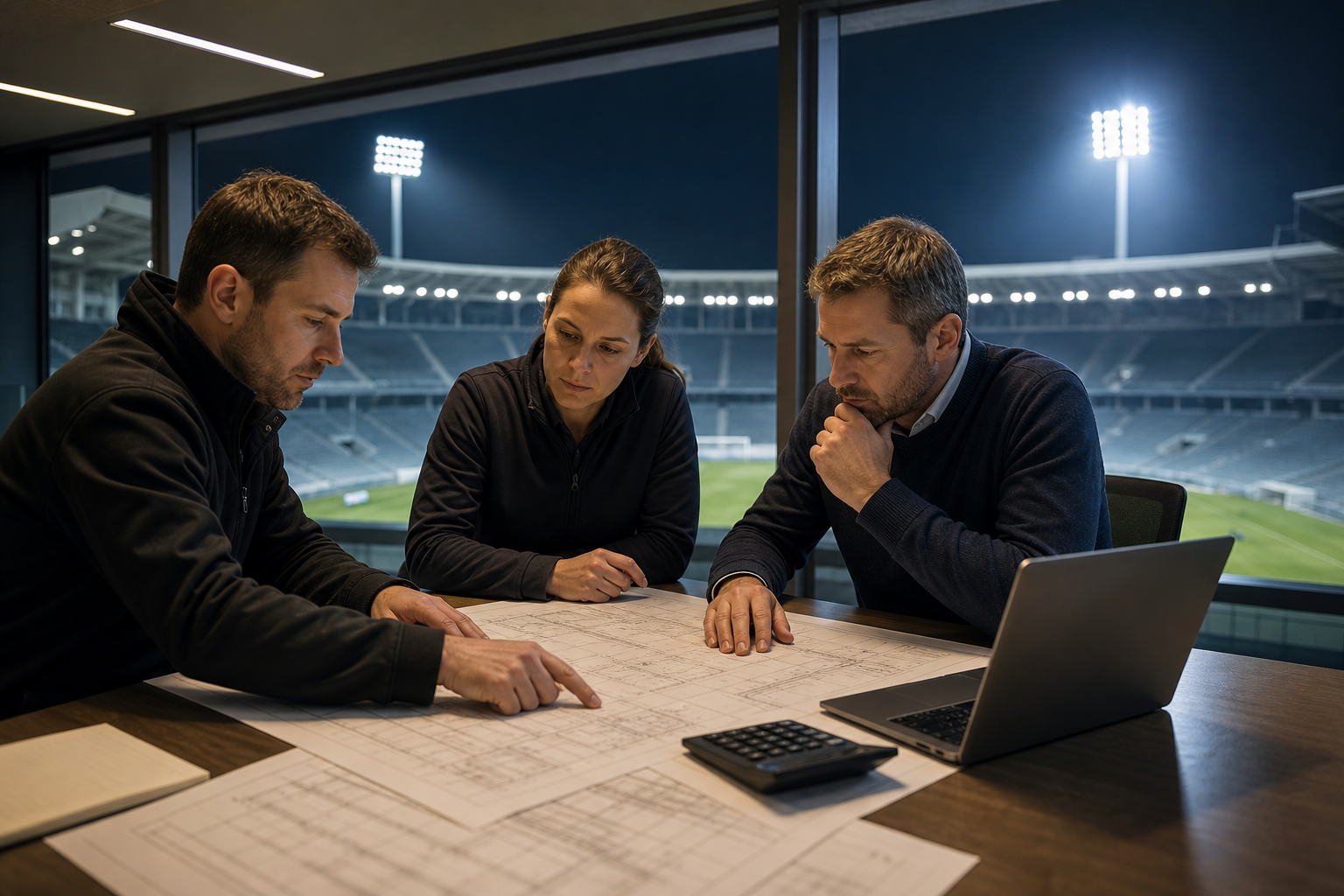
A useful budget begins with performance requirements and site conditions. Requesting “a price for stadium lights” before defining lux, uniformity, pole geometry and camera needs usually produces quotations that cannot be compared. Start with the LED stadium lighting design guide, then build the commercial budget around the approved photometric concept.
| Budget component | Main cost driver | Buyer evidence |
|---|---|---|
| LED luminaires | Quantity, output, optics, drivers and controls | Model list, IES files and unit quotation |
| Poles and brackets | Height, wind load, foundations and access | Structural drawings and load report |
| Electrical system | Cables, panels, voltage, surge protection and backup | Single-line diagram and load schedule |
| Installation | Crane access, labour, aiming and site restrictions | Method statement and installation scope |
| Engineering | Survey, DIALux design, structural review and testing | Deliverables and acceptance criteria |
| Lifecycle cost | Energy tariff, operating hours and maintenance | Annual schedule and maintenance plan |
A community training field and a televised professional stadium are different engineering projects. FIFA notes that broadcast-driven floodlighting features can have a high cost and recommends matching the lighting standard to the highest realistic event level. Higher requirements add vertical illuminance, camera-direction coverage, stricter uniformity, colour quality, flicker performance, power resilience and more control modes. See the official FIFA stadium technical guidance.
Current UEFA infrastructure requirements illustrate the scale difference: Category 1 starts at 350 average horizontal lux or the broadcaster requirement, while Category 4 requires 1,400 horizontal lux, 1,000 vertical lux on each reference plane and higher uniformity. Backup power requirements may also apply. Confirm the current UEFA floodlighting requirements and local rules before budgeting.
Use the following framework instead of multiplying fixture quantity by a catalogue price:
Total installed cost = luminaires + poles/brackets + electrical work + controls + installation + engineering/commissioning + logistics/taxes + contingency
Request each component as a separate line item. This exposes exclusions and prevents a low equipment price from hiding expensive civil or electrical work. State the quotation currency, Incoterm, validity period, delivery point and whether duties or local taxes are included.
| Project type | Potential advantage | Cost risk to verify |
|---|---|---|
| Reuse existing poles | Avoids new towers and foundations | Wind area, bracket load, corrosion and aiming geometry |
| Reuse electrical circuits | Reduces trenching and cable work | Voltage drop, panel capacity, grounding and surge protection |
| New four-pole layout | Geometry can be designed for the target | Foundations, cranes, permits and boundary setbacks |
| Roof-mounted system | May avoid separate field poles | Roof load, access, cable routes and maintenance safety |
Do not assume a retrofit is automatically cheaper. If existing poles cannot support the new wind area, or their locations cannot meet glare and uniformity targets, partial reuse can create redesign and installation costs later.
Operating cost should use connected load, actual schedules and local electricity tariffs. Consider an illustrative system with 56 × 1,000W luminaires operating four hours per day for 250 days:
Connected load: 56 × 1.0 kW = 56 kW
Annual energy at full output: 56 kW × 4 hours × 250 days = 56,000 kWh
Annual electricity cost: 56,000 kWh × the buyer's delivered electricity tariff
If verified operating scenes average 70% load: 39,200 kWh per year
This is an example, not a guaranteed saving. Dimming behaviour, driver efficiency, warm-up, event schedules and auxiliary loads must be included. The fixture reference is Hishine's 1000W LED stadium light; final quantities require IES simulation.
The US Department of Energy recommends evaluating lighting through lifecycle cost and considering controls such as dimming to reduce energy use. Its LED purchasing guidance also notes that maintenance and lumen depreciation should be included in long-term planning.
Site survey, CAD drawing preparation and photometric revisions
Pole structural assessment, foundation design and soil investigation
Crane, lift, traffic control and restricted working hours
New switchboards, long cable runs, grounding and surge protection
Control gateway, programming, training and remote-support licences
Freight, insurance, import duty, local tax and inland delivery
Night aiming, calibrated measurements and corrective visits
Spare drivers, surge devices, optics and access equipment
Issue one RFQ package to every bidder. Each proposal should use the same field dimensions, pole layout, target criteria, maintenance factor, operating hours and electrical assumptions. Require a compliance table that labels each item as included, excluded or optional.
Compare delivered performance, not watts alone. A lower fixture quantity is valuable only if the IES model meets horizontal and vertical illuminance, uniformity, glare and spill-light requirements. Review the complete range of LED sports lighting systems after the design inputs are fixed.
Dimensioned plan, sport, venue category and event level
Pole positions, heights, setbacks, condition and structural limits
Required lux, uniformity, glare, colour and flicker criteria
Voltage, frequency, control scenes and backup-power requirement
Annual operating schedule and local electricity tariff
Requested IES files, DIALux report, aiming schedule and load summary
Incoterm, destination, taxes, installation scope and delivery deadline
Commissioning test, warranty scope, spare parts and exclusions
Only a rough budget. A reliable quotation also needs venue level, poles, lux and uniformity criteria, voltage, controls, environmental limits and installation scope.
Not always. New poles, foundations, trenching, electrical panels, cranes and commissioning can equal or exceed equipment cost on difficult sites.
No. Compare delivered photometric performance, quantity, structural load, controls, energy use and maintenance—not input watts alone.
Multiply actual system kW by annual operating hours and the delivered electricity tariff, then add maintenance, control services and planned replacement parts.
Only after checking condition, wind area, bracket loads, aiming geometry, cable capacity and the target photometric result.
Use one RFQ package and require the same assumptions, line-item scope, photometric criteria, Incoterm, commissioning method and exclusions from every bidder.
Need a project-specific stadium lighting budget?
Send the field dimensions, pole information, target lighting level, voltage and project location for an initial scope review.
Author 2024-08-06
LED technology itself is not automatically harmful to children’s eyes. This guide explains the differences between permanent eye damage, temporary visual discomfort and sleep disruption, while showing...
Author 2026-07-29
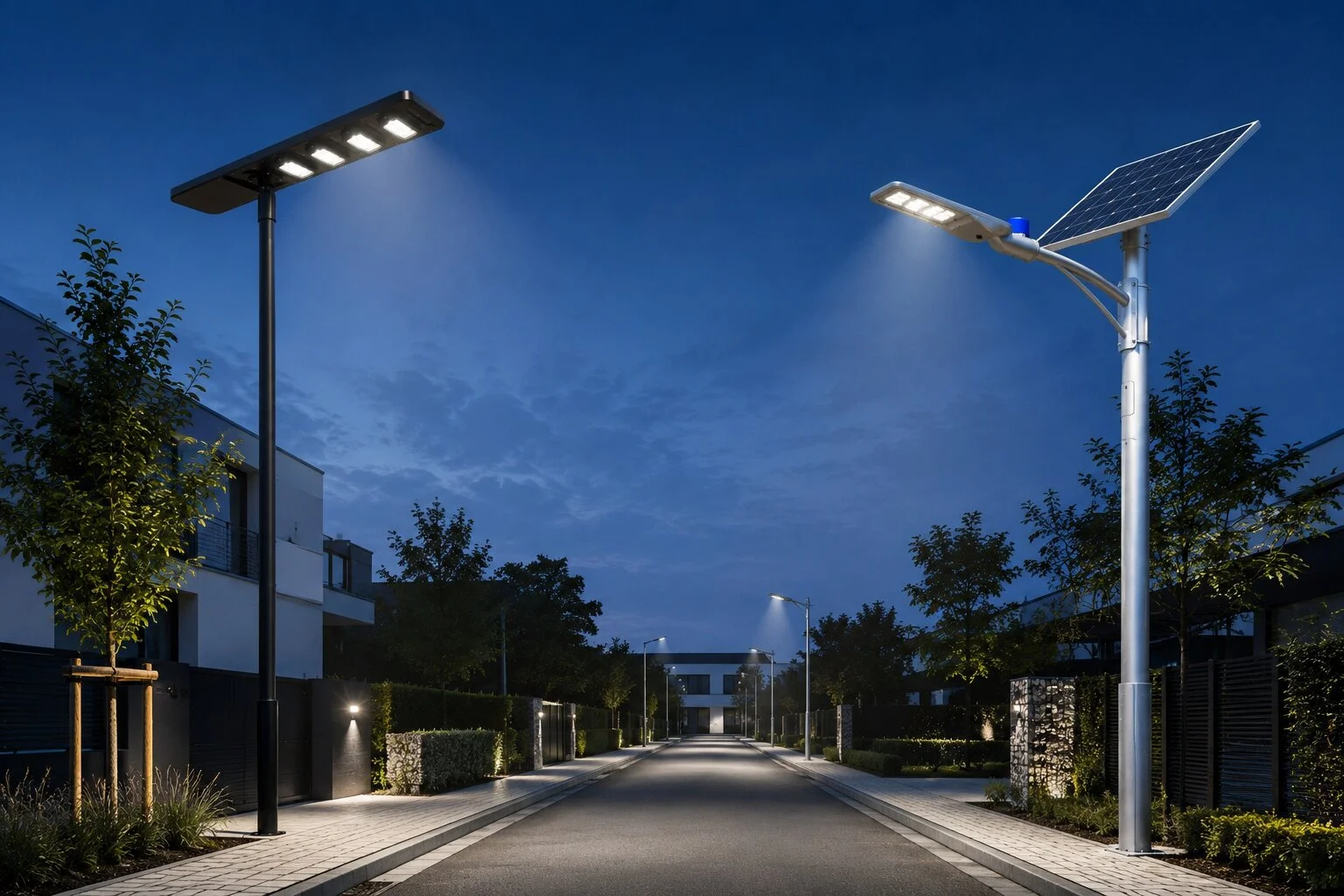
All-in-one and split solar street lights each offer different advantages. This guide compares their system structure, installation, solar panel flexibility, battery capacity, maintenance, cost, and su...