FIFA LED stadium light smart system supplier in Bolivia


Request a Highway Solar Lighting ProposalRequest a Highway Solar Lighting Proposal Request a Highway Solar Lighting ProposalRequest a Highway Solar Lighting Proposal
Highway lighting is one of the most demanding applications in outdoor illumination projects.
Unlike residential or urban roads, highways require:
Higher brightness
Longer lighting distance
Strong wind resistance
Stable power supply
Long lifespan design
Choosing the wrong solar street light system can lead to poor visibility, safety risks, and high maintenance costs.
This guide explains how to correctly select solar street lights for highway projects from an engineering and procurement perspective.
Before selecting a system, you must define project conditions:
Road width (2 lanes / 4 lanes / 6 lanes)
Traffic volume (low / medium / high)
Lighting standard (lux requirement)
Weather conditions (wind, rain, snow)
Highway lighting is usually designed for 20–50 lux depending on country standards.
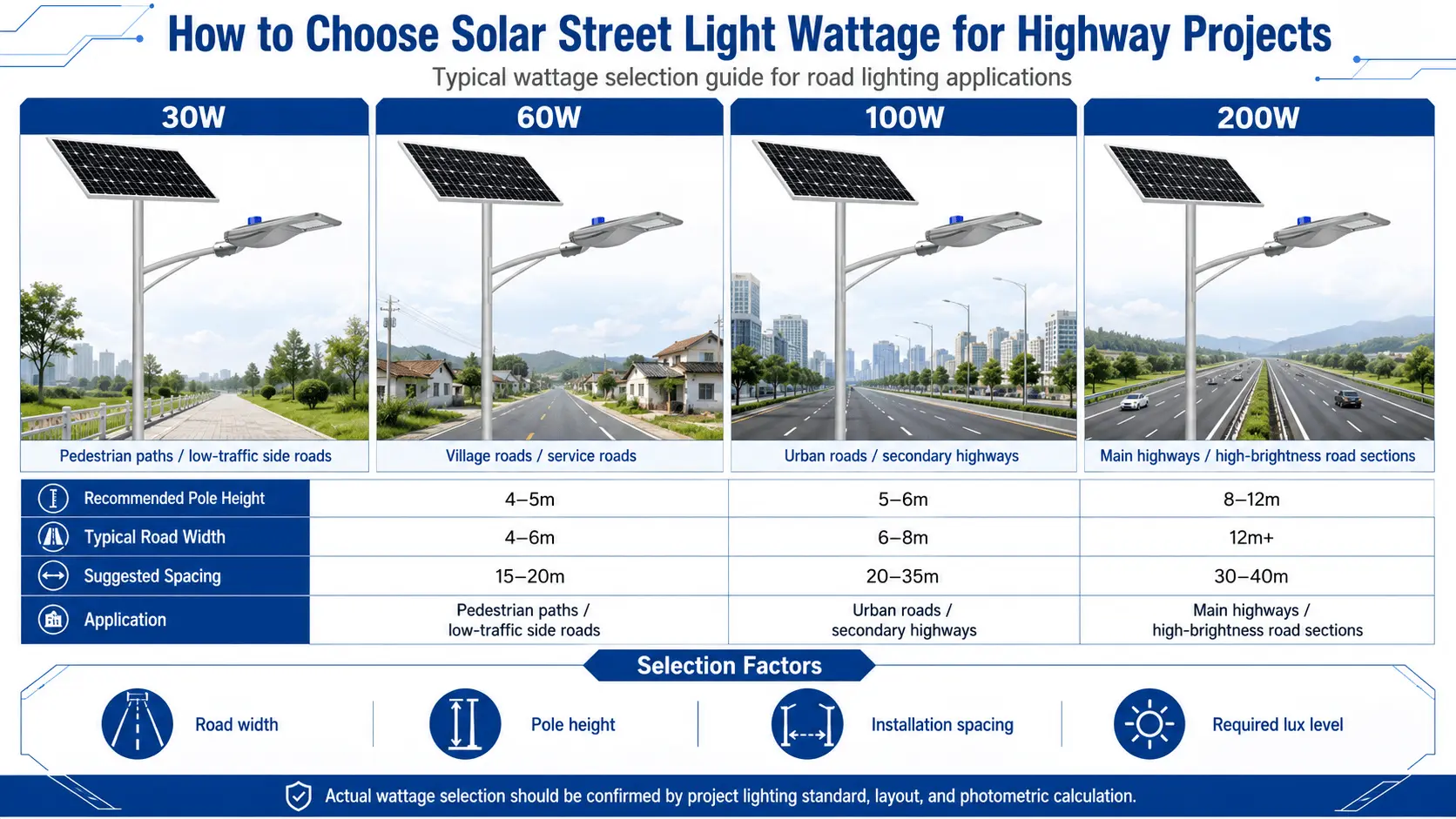
Wattage directly affects brightness and coverage.
Small roads: 30W–60W
Secondary highways: 60W–100W
Main highways: 100W–200W
For most highway EPC projects, 100W–200W solar street lights are commonly used.
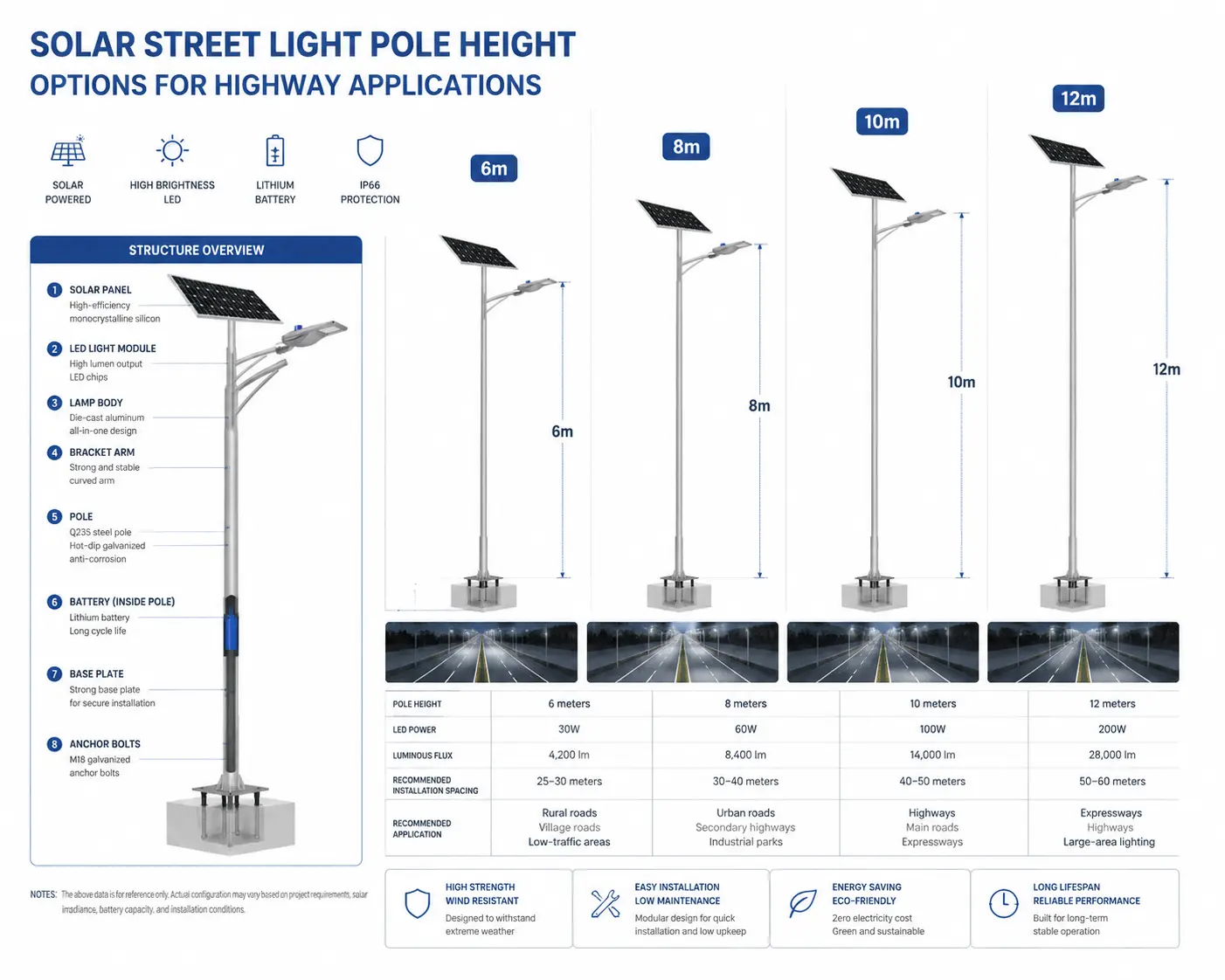
Pole height determines lighting coverage and safety.
6–8 meters → small roads
8–10 meters → secondary highways
10–12 meters → main highways
Higher poles require:
stronger steel structure
anti-corrosion treatment
wind resistance design
Battery is the most important component in highway solar lighting systems.
✔ LiFePO4 lithium battery
3–5 year lifespan
high temperature resistance
stable energy output
suitable for EPC projects
❌ Avoid cheap gel batteries for highway use due to instability.
Solar panel must match energy consumption.
High-efficiency monocrystalline panels are recommended
Oversizing panel improves winter performance
Poor sizing leads to nighttime failure
Highway lighting requires:
High lumen output (120–160 lm/W)
Wide beam angle (140°–150°)
Anti-glare design
Poor optics = dark spots + unsafe driving conditions
Highway environments often face strong wind loads.
Ensure:
Hot-dip galvanized steel poles
Wind resistance ≥ 120 km/h (standard minimum)
Reinforced mounting brackets
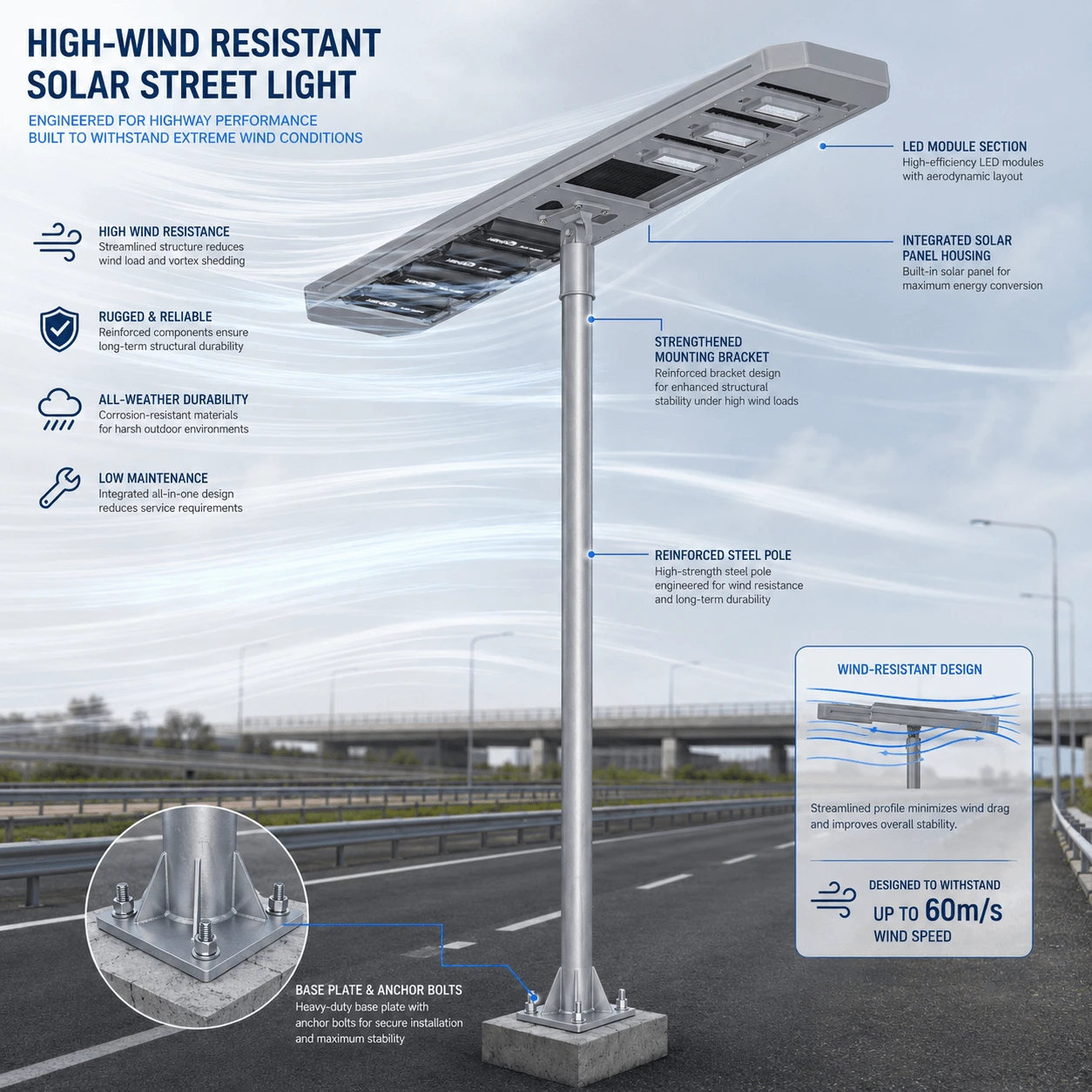
Modern highway systems may include:
Motion sensors
Time-based dimming
Remote IoT monitoring
Benefits:
energy saving
longer battery life
lower maintenance cost
For highway projects, supplier selection is critical.
Check:
OEM/ODM capability
Certifications (CE / RoHS / ISO / UL)
Production lead time (important for EPC)
Engineering support capability
Low-cost suppliers often fail in long-term highway projects.
Choosing wattage too low
Ignoring wind load design
Using cheap batteries
Wrong pole height selection
No engineering simulation
Choosing solar street lights for highway projects is not just a purchasing decision — it is an engineering system design process.
A proper system must balance:
brightness
stability
durability
long-term cost efficiency
For EPC and municipal projects, investing in a reliable system is always more cost-effective than choosing the lowest price option.
We provide professional OEM/ODM solar street light solutions for highway and infrastructure projects, including:
Engineering design support
Fast delivery (3–5 days samples)
Bulk production (15–20 days)
CE / RoHS / ISO / UL certified systems
Contact us for customized highway lighting solutions.
Author 2024-08-06
LED technology itself is not automatically harmful to children’s eyes. This guide explains the differences between permanent eye damage, temporary visual discomfort and sleep disruption, while showing...
Author 2026-07-29
All-in-one and split solar street lights each offer different advantages. This guide compares their system structure, installation, solar panel flexibility, battery capacity, maintenance, cost, and su...